Pages

Thursday, March 10, 2016

NanoDrop Pioneers! (Legionella pneumophila Blog Week 4)

Last Friday Josh showed our group (Daisy, Zaira and me) how to use the new NanoDrop machine! It was awesome to be the first ones to learn how to use it and actually get to run our samples through it.  Daisy even taught Bethany how to run her samples in the NanoDrop. 
     The NanoDrop measures the concentration of DNA in the any given sample.  It also has the ability to determine the purity of DNA in a tested sample by measuring the ratio of absorbance measured at wavelengths of 260nm and 280nm.  DNA tends to absorb at a wavelength of 260nm while protein, phenol and other contaminants absorb at a wavelength of 280nm (NanoDrop, 2007).  By comparing the two measurements, the NanoDrop is able to determine purity of DNA.  A ratio measurement for reasonably pure DNA would be around 1.8.  As you will see in the attached image, our samples do not display this type of purity.  The lowered purity is expected because our samples, as of now, do not contain purely DNA. The samples have other contaminants that affect this reading.  Daisy and Zaira have cut DNA samples out of agarose gels after PCR in the past and their results actually were aligned with what would be expected for pure DNA.  So we will get there soon!

NanoDrop, http://www.bio.davidson.edu/gcat/protocols/NanoDrop_tip.pdf

Thursday, March 3, 2016

Doing Some Actual Work (Legionella pneumophila Blog Week 3)

I finally had the chance to do some actual work this week involving the collection of samples and working on extracting genetic material from the sample collected.  Oliver and I collected a sample of water from the cooling towers and we will be filtrating and extracting (if there is any) genetic material from our samples this week.  

Up until now I had been doing a great deal of background reading to familiarize myself with the bacteria, its significance and the methods that we would use in order to positively identify the presence of Legionella pneumophila.  


First up in the process was the actual collection of the sample.  Down below you'll see the location and a brief description of where the sample was taken from.  Once the sample was collected, it must undergo a filtration process in order to concentrate the contents that were in the sample into 5mL of water so that we can work with it better in the lab.  (FYI: Video is loud)

Once the samples have been concentrated the DNA (if there is any) of whatever was in that water is extracted from that sample using a Soil DNA Extraction Kit.  What this kit does is, take all of the genetic material that was in that sample and extract it from the organisms that were residing in the sample of water.  


This was my first time going through all of these steps and I think I was able to get through everything successfully, with the help of my teammates (Daisy and Zaira) of course!  I guess that's all for now, tomorrow we'll get a chance to use and learn how to use the new NanoDrop machine so I'm really excited about that.

Thursday, February 25, 2016

Week 2 Legionella pnuemophila Research

Okay so here is an update on what is going on with this research project.  After laboring over the research proposal I have devised a possible route of exploration.  Much of the ground work has already been established by my partners in this project.  Their goal was to find out whether or not Legionella pneumophila was present in water systems around our school.  The samples they collected underwent a series of procedures that helped isolate the DNA of the bacteria as well as positively identifying L. pneumophila using genomic sequencing.

Using similar procedures to identify the presence of L. pneumophila I would be interested in seeing whether the bacteria has higher populations during the warmer months than the cooler months. What I am proposing to study is the concentration of DNA of the bacteria and compare this to the data that already exists.  The bacteria tends to like warm environments and is especially present in hot water systems.  Since Phoenix can get so hot I feel that they may present themselves in higher numbers by also accumulating in 'cold' water systems when temperatures reach the highs we all know and love.

However there are some obstacles that must be overcome in order for this experiment to be successful.  The biggest obstacle I foresee is being able to collect enough samples while it is still relatively cool.  The warm weather we felt was caused by a heat wave and hopefully I will be able to collect relevant samples when it cools down. If it cools down. 

Thursday, February 18, 2016

Legionella Introduction

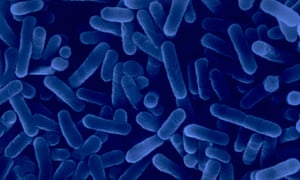
legionella pneumophila bacteria which causes legionnaires disease
Legionella pnuemophila (Image source: theguardian.com)
 
Legionella pnuemophila pictured here, is a bacteria that can cause humans to develop acute pneumonia (also known as Legionnaire's disease or legionella pneumonia) 2-10 days after an individual breathes in a mist of water containing the bacteria.  In other words, when aeorosolized, the  inhaled bacteria can cause pneumonia.  Although pneumonia can oftentimes be easily treated at home with the disease ending after 2-3 weeks substantial complications can arise from individuals that have immune deficiencies such as the elderly.  Complications may also arise in individuals with diseases that affect the immune system such  as: cancer patients undergoing chemotherapy, people infected with AIDS among others.

 Presence of Legionella pnuemophila in water sources can pose health threats for high traffic areas, especially when there are numerous individuals in close contact with each other.  A college campus may be a perfect breeding ground for the propagation of Legionella pnuemophila and ultimately pneumonia in a given population.  For this reason knowing whether or not Legionella pnuemophila is present in the water and in biofilm around campus can help a campus implement ways to reduce the number of individuals that come into contact with this bacteria.

Knowing Legionella pnuemophila presence is the basis for the research that my team has been conducted in the past year and a half and at some point this research may help reduce the bacteria's population on campus or even eliminate it thus eliminating the potential for students, staff and faculty to develop pneumonia.